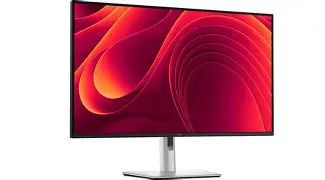
The Ultimate Setup Guide for Your Dell Pro 32 Plus Business Monitor
The Dell Pro 32 Plus Business Monitor is positioned for professionals who need a large, clear workspace and the connectivity to match modern laptops and desktops. This guide walks through everything a buyer or new owner needs to know: unpacking and physical setup, display calibration, connectivity and peripheral management, daily workflows and real-world use cases, and advanced tips for maximizing productivity and longevity. It also examines what typical buyers care about, offers an analysis of strengths and weaknesses, and provides a practical buying guide to help decide whether this monitor suits specific needs.
Introduction: Who the Dell Pro 32 Plus is for
The target audience for a 32-inch business monitor is broad, ranging from knowledge workers who need multiple windows visible at once, to analysts who work with large spreadsheets, to software developers, designers, and remote meeting hosts. The Dell Pro 32 Plus aims to balance office-friendly ergonomics and business-grade connectivity with a large, crisp display. Buyers typically prioritize screen real estate, clarity, color consistency for design tasks, easy connectivity to modern laptops, and ergonomic adjustability for comfortable all-day use.
Unboxing and Physical Setup
Start by choosing a stable workspace with enough depth for a 32-inch display and the comfortable viewing distance it requires. A typical desktop setup needs at least 24–30 inches of depth for desktop items and cable runs. Unpack carefully and confirm all standard accessories are present: monitor stand (or base and arm hardware), necessary power cable, and included video or USB-C cables if supplied in the box. Keep the packaging until the monitor is set up and tested in case of returns or warranty exchanges.
Assembly and placement
- Attach the stand to the display per the quick start guide. If a desk-mounted arm is preferred, check the VESA mounting pattern and purchase a compatible arm rated for 32-inch panels.
- Position the display so the top of the screen is at or slightly below eye level for neutral neck posture. For most users, this means the center of the screen will be slightly below eye height when seated.
- Place the monitor at an arm’s length distance (roughly 20–30 inches) for general office tasks. Move further back if using the display for wide, panoramic content or to reduce eye strain.
Connectivity and Cable Management
One of the selling points of business monitors is the range of ports for docking and peripherals. The Dell Pro 32 Plus typically emphasizes USB-C connectivity (with power delivery), upstream USB hub ports, HDMI, DisplayPort, and sometimes a built-in Ethernet passthrough via the USB-C dock functionality. When setting up, consider the following workflow:
- If a laptop is used as the primary computer, connect via USB-C to get display, data, and power over one cable — this reduces clutter and speeds transitions between workspaces.
- For desktop PCs, use DisplayPort or HDMI for the highest refresh/feature compatibility. Reserve USB-C for laptops that support alt-mode video and PD (power delivery).
- Use the monitor’s USB hub to connect keyboard, mouse, and a wired headset. If the monitor supports KVM functionality, configure it to switch input sources while preserving connected USB peripherals.
- Implement simple cable management: route cables through the stand's channel (if present), use Velcro straps, and label both ends for quick troubleshooting.
Initial Display Configuration and Calibration
Out of the box, business monitors often ship with vivid default settings that may not be ideal for long work sessions or design-critical tasks. For a comfortable and accurate experience, take a few minutes to adjust settings.
Basic on-screen adjustments
- Set brightness to a comfortable level: 120–140 cd/m² is generally adequate for office lighting. Reduce brightness in dim environments to prevent eye strain.
- Adjust color temperature to a neutral preset (often named "6500K," "sRGB," or "Standard") for general productivity. Warmer settings help reduce blue light in the evening.
- Turn off dynamic contrast or any overly aggressive enhancement modes that alter text clarity or color consistency.
- Switch to the monitor’s native resolution for the sharpest text and UI elements. For a 32-inch monitor, native resolution is key to avoiding blurred fonts and scaled UI artifacts.
Color calibration for creators and designers
When color accuracy matters, a hardware colorimeter and calibration software are recommended. Calibrate to sRGB or a specific working color space used in the workflow. For teams that require consistent output across devices, create and distribute ICC profiles and store a calibrated profile on each workstation.
Ergonomics and Comfort
Because 32-inch displays occupy more vertical and horizontal space, ergonomics become critical. The Dell Pro 32 Plus aims to provide tilt, swivel, height adjustment, and pivot (in some stands) so users can tailor the monitor position to their posture and tasks.
Find top-rated Electronics products at great prices.
Shop Amazon →- Height: Adjust so the top third of the display is at eye level — this keeps the neck neutral.
- Tilt: Use small forward tilts to reduce reflections from overhead lighting and to get a more natural viewing angle for the center of the screen.
- Swivel and pivot: Useful when sharing the screen with nearby colleagues or when switching between portrait workflows for long documents and landscape for spreadsheets.
- Consider an external anti-glare filter or reposition lighting if reflections remain an issue despite adjustments.
Real-World Use Cases
The advantages of a large business monitor like the Dell Pro 32 Plus become tangible in daily use:
- Analysts and financial professionals: Multiple windows and large spreadsheets fit comfortably, reducing the need to jump between tabs and improving situational awareness when comparing data sets.
- Developers: View code, terminal, and documentation side-by-side. Increased vertical space reduces scrolling during debugging or when reviewing long files.
- Remote workers and meeting hosts: Run video conferencing in one section, with notes and chat apps visible simultaneously; the large display helps maintain eye contact and monitor chat and participant lists concurrently.
- Designers and content creators: Benefit from a broad workspace for timelines, tool palettes, and full-resolution previews. With proper calibration, the monitor can serve as a secondary reference display.
- Multitaskers: Use built-in split-screen utilities or the operating system’s window management to define repeatable layouts that maximize productivity.
Performance Considerations
For most office and creative workflows, the display’s color reproduction, viewing angles, and text clarity matter more than high refresh rates. The Dell Pro 32 Plus is intended to prioritize clarity and consistency. When evaluating performance:
- Assess text rendering at the native resolution — sharpness and font rendering are critical for long reading sessions.
- Check for uniformity across the panel. Minor backlight variance is common; significant clouding or bleed could indicate a defective unit.
- Color gamut: For designers, confirm whether the monitor targets sRGB, Adobe RGB, or a wider gamut and whether it can be calibrated to meet project requirements.
Pros & Cons
Pros
- Large workspace: A 32-inch panel provides ample room for multitasking and reduces the need for multiple monitors in many workflows.
- Business-grade connectivity: USB-C with single-cable convenience, integrated USB hub, and standard video inputs streamline a clean desk setup.
- Ergonomic flexibility: Adjustable stand options enable comfortable long-term use with proper posture.
- Professional design: Quiet, understated aesthetic that fits typical office environments and shared spaces.
- Built-in KVM or docking features (if present on the model): Helpful for users who switch between laptops or share peripherals between systems.
Cons
- Desk footprint: Requires more depth and width than smaller monitors, which may be a constraint in compact workspaces.
- Price premium: Larger, business-oriented monitors tend to cost more than consumer alternatives with similar panel size but fewer enterprise features.
- Calibration needed for color-critical work: Out-of-the-box settings may not suffice for professional photo or print work without calibration tools.
- Potential power and USB limitations: Single-cable laptop charging depends on host support for USB-C power delivery — some laptops may require their own chargers for full performance.
Comparison Table
| Feature | Dell Pro 32 Plus | Typical 32" Business Monitor | 27" Productivity Monitor |
|---|---|---|---|
| Screen size | 32 inches — larger workspace for multitasking | 32 inches — similar workspace but varies by bezel and stand | 27 inches — more compact, less desk depth required |
| Resolution | High native resolution (commonly 4K-class options on 32" business models) | High resolution; some offer 4K or QHD | High native resolution; 1440p or 4K on premium models |
| Connectivity | USB-C with power delivery, upstream USB hub, HDMI/DP variants | USB-C available on many, but varies by SKU | Often includes USB-C on newer models; fewer ports compared to 32" business options |
| Ergonomics | Height, tilt, swivel; VESA compatible | Varies; many match these ergonomics | Typically similar but with smaller vertical travel |
| Best for | Multitaskers, analysts, remote hosts, designers needing large canvas | Business users who need screen real estate and office features | Users with limited desk space who still want high clarity |
Buying Guide: What to Check Before Purchasing
Buying a 32-inch business monitor is an investment. Below are the practical considerations to weigh against budget and workflow.
Resolution and pixel density
For a 32-inch screen, native resolution determines sharpness. A higher pixel density (for example, 4K on a 32-inch screen) means crisper text and more usable workspace at native scaling. If the operating system scales UI elements, ensure applications handle scaling correctly to avoid blurry fonts or UI artifacts.
Connectivity and single-cable docking
Confirm that the monitor’s USB-C port supplies adequate power delivery for the intended laptop. If the laptop’s power needs exceed the monitor’s PD rating, keep the laptop’s charger handy. Check for additional upstream and downstream USB ports if the monitor will serve as a hub for peripherals.
Ergonomics and mounting
Verify that the stand supports the desired adjustments or check the VESA pattern for a third-party arm. A height-adjustable stand is particularly valuable for taller or shorter users and for sit-stand desk setups.
Color accuracy and calibration
If color-critical work is part of the role, check factory color specs and whether the monitor supports hardware calibration and ICC profiles. For general office use, a neutral sRGB preset is usually sufficient.
Looking for the best Electronics deals on Amazon?
View Offers →Warranty, business support, and longevity
Business buyers should consider warranty length and on-site or priority support options. Extended warranties and warranty services tailored for enterprises can reduce downtime in shared or mission-critical environments.
Portability and multi-monitor plans
Think about whether the monitor will be moved between locations. A lighter model with quick-release VESA or a detachable stand eases portability. When planning multiple monitors, consider bezel width and matching models to maintain visual consistency across a multi-display setup.
Advanced Tips and Troubleshooting
Speed up transitions between devices
Use the monitor’s KVM or input switching to connect two computers and switch with a single button press. Set up shared peripheral devices on the monitor’s USB hub so switching inputs also moves the keyboard and mouse to the active computer.
Fixing scaling and clarity issues
If text appears soft after enabling display scaling in Windows or macOS, ensure the video driver and OS are fully updated. For persistent issues, adjust ClearType (Windows) or font smoothing (macOS) and verify the monitor is running at its native resolution in the display settings.
Reduce eye strain for long sessions
- Enable blue light reduction features in the monitor or use OS-level Night Shift / Night Light.
- Follow the 20-20-20 rule: every 20 minutes, look at something 20 feet away for 20 seconds.
- Use task lighting rather than overhead lights that cause glare.
Conclusion
The Dell Pro 32 Plus Business Monitor is built around a simple promise: more room to work with business-focused connectivity and ergonomics that let professionals stay productive and comfortable. For those who juggle large spreadsheets, simultaneous communication and documentation windows, or require a generous canvas for design and review, a 32-inch business monitor can reduce friction and increase efficiency. Buyers should evaluate screen resolution, connectivity needs, and ergonomics against desk space and budget. With thoughtful setup — single-cable docking where available, measured calibration for color work, and proper ergonomic positioning — the Dell Pro 32 Plus can function as a flexible, long-term centerpiece of a modern professional workspace.